Walking into a garage with a stained, cracked concrete floor can feel demoralizing, turning what should be a functional extension of your home into an unsightly storage locker. Upgrading this space with a durable, brilliant resinous coating completely transforms the environment, blending commercial-grade resilience with residential aesthetics. However, navigating the financial landscape of this home improvement project requires a clear understanding of the variables that dictate your total investment.
Calculating the true epoxy garage floor cost involves balancing material grades, labor rates, and the baseline condition of your concrete slab. By treating this upgrade as a long-term property investment rather than a temporary cosmetic fix, you can make informed decisions that align with your budget and aesthetic goals. Let’s dive deep into the real-world expenses, installation methods, and value drivers that define this popular flooring transformation.
Demystifying the Average Epoxy Garage Floor Cost
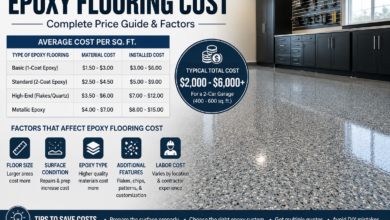
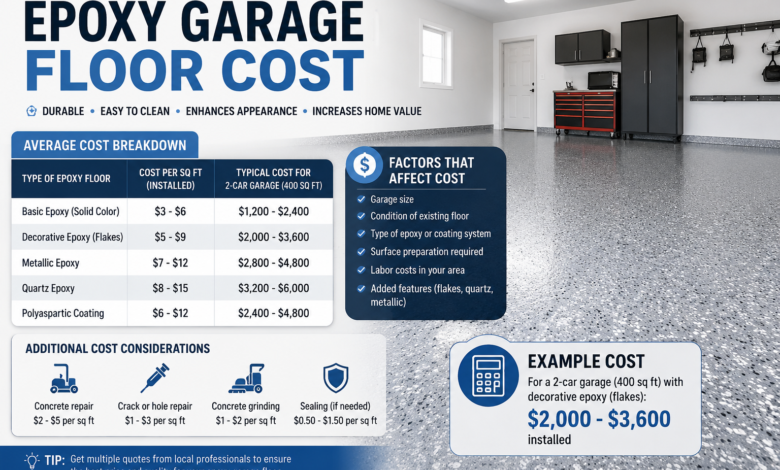
When homeowners begin researching the financial commitment required for this upgrade, they often encounter a wide variance in initial estimates. On average, the national epoxy garage floor cost ranges from $1,500 to $6,000 for a standard two-car garage, depending on whether you choose a basic coating or a premium multi-layer system. This investment translates to a square footage rate that accounts for both the raw chemicals and the intensive prep work required for a lasting bond.
To understand where your money goes, you must look at the flooring material expenses alongside the structural needs of your garage space. A standard two-car garage spans roughly 400 to 500 square feet, meaning a mid-range, professionally installed system will naturally reflect those spatial dimensions. While a minimalist solid-color application sits at the lower end of the pricing spectrum, complex decorative flake or metallic finishes will push the total expenditure toward the higher tier.
Professional Installation vs. DIY Project Expenses
Choosing between hiring a certified contractor or tackling the project yourself introduces a massive shift in your overall budget and long-term satisfaction. Homeowners looking to minimize upfront expenses frequently opt for a DIY epoxy kit, which can drastically lower immediate out-of-pocket costs to a fraction of professional fees. These retail packages typically range from $100 to $600, offering an attractive weekend project for enthusiastic property owners looking to save money.
However, the hidden trade-off of saving on labor is the inherent risk of premature peeling, hot-tire pickup, and inadequate surface preparation. Professional installers utilize heavy-duty concrete diamond grinders and industrial-grade polyaspartic topcoats that retail kits simply cannot match in chemical composition. While the professional epoxy garage floor cost demands a larger initial financial commitment, it ensures an industrial-grade bond that withstands vehicular traffic for decades.
Material Types and Their Financial Impact
The specific chemical formulation you select for your garage slab acts as the primary driver of both performance and project pricing. A budget-friendly water-based epoxy paint is easy to apply and highly accessible, but it yields a very thin dry-film thickness that wears down quickly under heavy use. These formulations are best suited for light foot traffic areas rather than high-performance automotive environments that demand superior impact resistance.
For those seeking maximum durability, a 100% solids epoxy or a modern polyaspartic system represents the gold standard of architectural coatings. These premium formulations cost more upfront due to their advanced chemical cross-linking properties, which provide exceptional resistance to chemical spills and abrasions. Investing in these higher-tier materials elevates the overall epoxy garage floor cost, but it prevents the need for costly recoating projects just a few years down the road.
The Architectural Breakdown of Per-Square-Foot Pricing
Breaking down the investment by spatial metrics allows homeowners to project their exact financial output based on their specific garage blueprints. A standard cost per square foot for a professionally applied, multi-layer epoxy system generally fluctuates between $3 and $12. This wide bracket accommodates various stylistic choices, regional labor market conditions, and the structural integrity of the underlying concrete foundation.
For a compact single-car garage encompassing roughly 250 square feet, the total price stays manageable, even when utilizing premium decorative options. Conversely, an expansive three-car garage layout requiring significant crack injection and moisture mitigation will naturally command a premium price tag. Understanding these spatial metrics helps you communicate effectively with local contractors and analyze line-item estimates with confidence.
| Project Scope & Coating Type | Average Cost Per Square Foot | Total Price Range (Two-Car Garage) | Expected Lifespan |
|---|---|---|---|
| DIY Water-Based Kit | $1.00 – $2.50 | $400 – $1,200 | 1 – 3 Years |
| Professional Solid Color (Solvent-Based) | $3.00 – $6.00 | $1,500 – $3,000 | 5 – 10 Years |
| Professional Decorative Flake System | $6.00 – $9.00 | $3,000 – $4,500 | 10 – 15 Years |
| Metallic / Designer Custom Finish | $9.00 – $15.00 | $4,500 – $7,500 | 15+ Years |
Hidden Surface Preparation Costs That Impact Budgets
The secret to a flawless, enduring resinous floor lies entirely in the invisible, labor-intensive preparation work performed before a single drop of liquid is poured. Contractors must evaluate the concrete moisture vapor emission rate to ensure trapped ground moisture won’t later bubble up and delaminate the new coating. If testing reveals high moisture levels, installing a specialized vapor barrier primer is an absolute necessity that adds to the baseline budget.
Furthermore, an older concrete slab marred by deep pitting, oil saturation, or extensive structural fissures requires significant crack repair compounding before coating application. Mechanical profiling, either through dustless diamond grinding or shot-blasting, is mandatory to open up the concrete pores for optimal chemical adhesion. Neglecting these preparation steps to artificially lower the immediate epoxy garage floor cost is the leading cause of catastrophic coating failure.
Design Aesthetics and Customization Expenses
Transforming a utilitarian garage into a show-stopping showroom requires selecting decorative elements that naturally influence your final material invoices. A popular decorative color flake system distributes vinyl chips across the wet base coat, providing excellent texture, slip resistance, and visual depth. This multi-layered approach requires additional clear topcoats to seal the chips, which incrementally raises the material volume and application labor.
For homeowners seeking a high-end, completely unique visual statement, a metallic epoxy finish utilizes pearlescent pigments manipulated with solvents to mimic flowing marble or molten metal. These designer floors require artisan-level installation techniques and precise timing, making them the most expensive aesthetic choice on the market. While these custom styles elevate the total epoxy garage floor cost, they deliver an unparalleled luxury aesthetic that redefines the entire property.
Regional Labor Variances and Market Trends
The geographic location of your home plays a surprisingly significant role in the labor estimates provided by local coating companies. Homeowners living in major metropolitan areas with high overhead expenses will experience elevated local contractor labor rates compared to rural regions. Additionally, local environmental regulations regarding volatile organic compounds (VOCs) can restrict certain chemical formulations, impacting regional material availability and pricing.
Seasonal climate fluctuations also influence installation timelines and pricing strategies, as extreme cold or high humidity alters the curing windows of resinous chemicals. Booking your installation during peak spring and summer months might result in premium pricing due to high residential remodeling demand. Understanding these regional market dynamics allows savvy homeowners to strategically time their projects and negotiate better rates with local installation professionals.
Long-Term Maintenance and Lifetime Value
Evaluating this home upgrade requires looking beyond the initial installation invoice to analyze the long-term operational savings and lifestyle benefits. An industrial-grade garage coating creates a seamless, non-porous barrier that eliminates dust generation and prevents automotive fluids from permanently staining the substrate. This ease of maintenance reduces your household cleaning chemical expenses and saves hours of intense physical scrubbing over the lifespan of the floor.
“When analyzing the true value of a home improvement project, homeowners must look past the initial capital expenditure. A professionally installed resinous floor acts as a protective shield that preserves the underlying concrete foundation while simultaneously accelerating the property’s overall market appeal.” — Marcus Vance, Principal Architectural Consultant
When properly maintained with simple sweeping and occasional mopping, a premium professional installation easily lasts fifteen years or longer without losing its luster. This longevity drastically contrasts with cheap retail paints that require frequent stripping, patching, and reapplying every few seasons. Viewed through this lens, the upfront epoxy garage floor cost proves to be a highly efficient, cost-effective decision over a decade of continuous residential use.
Structural Benefits and Real Estate Return on Investment
Beyond pure visual aesthetics, applying an advanced resinous coating to your garage floor provides structural reinforcement that protects your home’s foundation. The impermeable nature of the coating prevents water penetration, which protects the slab from the destructive freeze-thaw cycles that cause deep structural spalling. This added layer of protection mitigates the risk of facing catastrophic foundation concrete remediation costs down the line.
From a real estate perspective, a clean, finished garage function as an enticing selling point that sets your home apart in competitive housing markets. Prospective buyers increasingly view a finished garage as a premium bonus room, suitable for a home gym, workshop, or pristine automotive display space. Consequently, the initial epoxy garage floor cost is frequently recovered through boosted property valuation and accelerated buyer interest during resale.
Common Pitfalls That Inflate Installation Estimates
Navigating the quoting process with multiple contractors requires an observant eye to avoid unnecessary upcharges and hidden fees that bloat your budget. Some less-reputable companies may attempt to artificially inflate their bids by recommending excessive layers or unneeded premium topcoat additives. Always demand a highly detailed, line-item estimate that explicitly separates material costs, surface preparation hours, and labor fees.
Another common budgeting mistake is failing to disclose previous sealers, oils, or paints that may currently coat your garage slab. Discovering these existing layers mid-project forces installers to perform additional heavy-duty stripping passes, which instantly triggers unexpected remodeling change order fees. Being completely transparent about the history of your concrete slab ensures your initial epoxy garage floor cost quote remains accurate and predictable.
Conclusion
Investing in your garage flooring is a powerful way to enhance your home’s utility, cleanliness, and overall property value. While the initial epoxy garage floor cost can vary significantly based on materials, prep work, and professional labor, the long-term benefits far outweigh the upfront expenditure. By avoiding cheap DIY shortcuts and focusing on thorough surface preparation, you ensure a stunning, durable finish that elevates your garage from a simple parking spot to an asset.
Frequently Asked Questions
What is the average epoxy garage floor cost for a standard two-car garage?
The average epoxy garage floor cost for a standard two-car garage professionally installed typically ranges between $2,500 and $5,000.
Why do professional contractors charge more than retail DIY epoxy kits?
Professional contractors invest heavily in industrial machinery, such as dustless diamond grinders, to ensure the concrete pores are perfectly opened for a permanent chemical bond.
How does concrete condition affect the total epoxy garage floor cost?
The baseline condition of your garage floor dictates the amount of labor and material required during the crucial surface preparation phase.
Can moisture in the concrete slab increase the final installation price?
Yes, hidden moisture migrating upward through the concrete slab can cause the epoxy coating to bubble, blister, and completely fail over time.
Is a metallic finish more expensive than a standard decorative flake system?
A metallic finish is significantly more expensive than a standard flake system due to the artistic labor and multi-stage application process required.
You May Also Read: Nick Woltemade Stats