Epoxy Flooring Cost: Complete Pricing Guide, Factors, Installation Expenses, and Long-Term Value

Choosing a new floor can dramatically change the appearance, durability, and functionality of a space. Whether you’re upgrading a garage, warehouse, basement, commercial facility, or residential interior, understanding epoxy flooring cost is essential before making an investment.
Epoxy flooring has become one of the most popular flooring solutions because it combines durability, aesthetics, and long-term performance. However, pricing varies significantly based on material quality, floor condition, labor requirements, coating thickness, and customization options. This comprehensive guide explores every aspect of epoxy pricing so you can make an informed decision and maximize value from your flooring project.
Understanding Epoxy Flooring and Its Cost Structure
Epoxy flooring is a resin-based coating system that creates a hard, durable, and attractive surface over concrete floors. Unlike traditional paint, epoxy forms a chemical bond with the concrete, creating a seamless finish that withstands heavy traffic, impacts, stains, and moisture.
The overall epoxy flooring cost depends on several variables, including concrete surface preparation requirements and resin coating systems selected for the project. Basic installations may cost significantly less than decorative systems featuring metallic finishes, flakes, or custom designs.
Average Epoxy Flooring Cost Per Square Foot
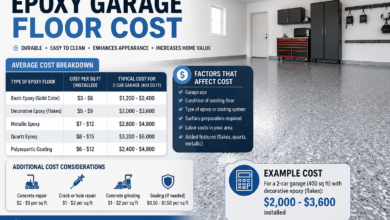
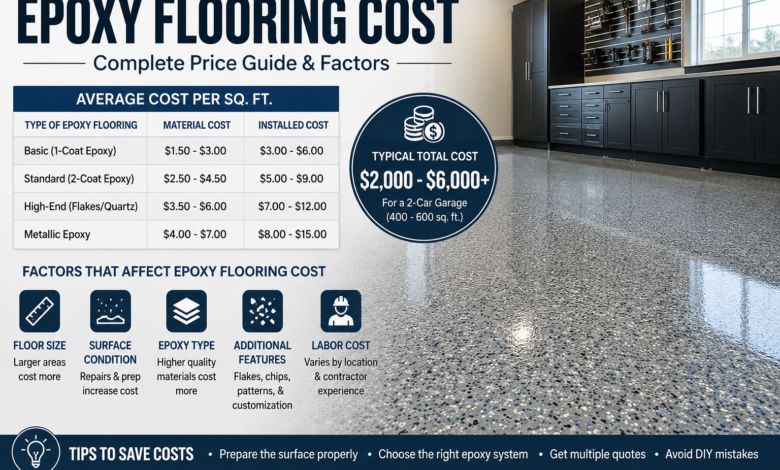
Most homeowners and property managers calculate budgets based on square footage. On average, epoxy flooring installations typically range from $3 to $12 per square foot, though premium systems can exceed this range depending on complexity and design.
Basic coatings generally involve minimal customization and thinner applications, while premium installations include decorative floor coatings and industrial-grade epoxy systems that provide enhanced durability and visual appeal. Larger projects often benefit from lower per-square-foot pricing due to economies of scale.
| Epoxy Type | Average Cost Per Sq. Ft. | Typical Application |
|---|---|---|
| Basic Water-Based Epoxy | $3–$5 | Residential spaces |
| Solvent-Based Epoxy | $4–$7 | Garages and workshops |
| Solid Epoxy System | $6–$12 | Commercial environments |
| Flake Epoxy Flooring | $5–$10 | Garages and showrooms |
| Metallic Epoxy Flooring | $7–$15 | High-end interiors |
| Industrial Epoxy Flooring | $8–$20+ | Warehouses and factories |
Factors That Influence Epoxy Flooring Cost
Several components contribute to the final project price. Material costs represent only part of the overall investment, while labor and preparation frequently account for a substantial percentage of total expenses.
Floor condition is often the most significant variable. Cracks, uneven surfaces, oil contamination, and moisture issues require additional floor grinding services and concrete repair work, which can increase installation costs considerably before coating begins.
Cost of Surface Preparation
Many people underestimate the importance of preparation. Yet surface preparation often determines the success and longevity of an epoxy installation more than the coating itself.
Professionals typically perform diamond grinding equipment processes and concrete profiling techniques to ensure proper adhesion. If preparation is skipped or performed poorly, peeling, bubbling, and premature coating failure may occur, resulting in costly repairs.
Garage Epoxy Flooring Cost
Garage floors remain among the most common epoxy applications. Homeowners appreciate the clean appearance, chemical resistance, and ease of maintenance that epoxy provides.
For a standard two-car garage, the epoxy flooring cost generally ranges between $1,200 and $5,000 depending on coating type and customization. Features such as garage floor coating enhancements and decorative flakes system installations can increase the final project budget while adding visual appeal.
Residential Epoxy Flooring Pricing
Residential epoxy flooring has expanded beyond garages into kitchens, basements, laundry rooms, and living spaces. Modern formulations offer stylish finishes that complement contemporary home designs.
Homeowners increasingly choose seamless flooring solutions and high-gloss epoxy finishes because they create sleek surfaces that are easy to clean and resistant to everyday wear. These benefits often justify the higher upfront investment compared to traditional flooring materials.
Commercial Epoxy Flooring Cost
Commercial environments demand flooring systems capable of handling heavy foot traffic, equipment movement, and frequent cleaning. As a result, commercial installations often require thicker and more durable coating systems.
Businesses frequently invest in heavy-duty floor systems and chemical-resistant coatings to ensure long-term performance. While installation costs may be higher initially, the reduced maintenance requirements can generate significant savings over time.
Industrial Epoxy Flooring Expenses
Industrial facilities face some of the toughest flooring conditions. Manufacturing plants, distribution centers, and warehouses require coatings that can withstand impacts, machinery, and harsh chemicals.
Industrial projects often utilize high-build epoxy coatings and abrasion-resistant flooring technologies. These specialized systems typically involve multiple layers and extensive preparation, contributing to higher installation costs.
Water-Based vs Solvent-Based vs Solid Epoxy
Not all epoxy products are created equal. Different formulations offer varying levels of durability, appearance, and performance, which directly affect pricing.
Water-based systems are generally more affordable, while solid epoxy coatings and solvent-based epoxy systems deliver superior durability and chemical resistance. Understanding these differences helps property owners choose the most cost-effective solution for their specific needs.
Metallic Epoxy Flooring Cost
Metallic epoxy has gained popularity for its dramatic visual effects. By incorporating metallic pigments into the coating, installers create unique patterns that resemble marble, flowing water, or polished stone.
Because installation requires advanced techniques and artistic expertise, metallic systems often command premium pricing. The combination of custom floor finishes and decorative metallic pigments makes these floors a favorite choice for luxury residential and retail spaces.
Flake Epoxy Flooring Cost
Flake systems incorporate decorative vinyl chips into the epoxy coating to enhance both aesthetics and slip resistance. These floors are especially popular in garages, gyms, and commercial environments.
The inclusion of vinyl chip flooring and textured epoxy surfaces adds moderate cost compared to standard coatings. However, many property owners consider the improved appearance and safety benefits worthwhile.
Labor Costs for Epoxy Installation
Labor often represents a significant portion of the overall project budget. Skilled installation is critical because epoxy systems require precise mixing, timing, and application techniques.
Professional contractors charge for expertise, equipment, and project management. Services may include professional floor installation and surface preparation specialists, ensuring the flooring system performs as intended for many years.
DIY vs Professional Installation Costs
Many homeowners consider installing epoxy flooring themselves to reduce expenses. While DIY kits are available, the outcome often differs substantially from professional-grade installations.
DIY projects may save money initially, but mistakes involving epoxy application techniques and floor preparation methods can lead to coating failure. Professional installations typically provide better durability, appearance, and warranty protection.
Cost of Repairing Existing Concrete
Concrete condition directly affects project costs. Floors with cracks, pits, moisture problems, or structural issues require repair before epoxy can be applied.
Repair work may involve concrete crack filling and surface restoration services to create a stable foundation. Although repairs increase upfront expenses, they help prevent future flooring failures and extend coating lifespan.
How Floor Size Impacts Pricing
Project size significantly influences pricing structures. Larger installations generally receive lower per-square-foot rates because setup costs are distributed across more area.
Smaller projects often carry higher minimum charges due to mobilization, equipment transportation, and labor requirements. Understanding this relationship helps property owners estimate realistic epoxy flooring cost expectations for their specific spaces.
Customization and Decorative Features
Decorative enhancements can dramatically alter the final project budget. Colors, patterns, textures, and branding elements create unique flooring systems tailored to individual needs.
Popular upgrades include custom epoxy designs and multi-color floor finishes that transform ordinary concrete into visually striking surfaces. These enhancements add personality while maintaining the practical benefits of epoxy flooring.
Durability and Long-Term Value
One reason epoxy flooring remains popular is its impressive durability. Properly installed systems can last many years while maintaining appearance and functionality.
Property owners benefit from reduced maintenance costs, improved cleanliness, and enhanced resistance to damage. Features such as impact-resistant flooring and stain-resistant surfaces contribute significantly to long-term value.
Maintenance Costs After Installation
Maintenance requirements are generally minimal compared to many alternative flooring materials. Routine sweeping and occasional mopping are often sufficient to preserve appearance.
The durability of low-maintenance flooring systems and protective floor coatings reduces the need for expensive repairs or replacements. This long-term advantage often offsets higher installation costs.
Common Misconceptions About Epoxy Flooring Cost
Many people assume all epoxy floors are expensive, while others believe every epoxy product delivers identical performance. Neither assumption accurately reflects reality.
Pricing varies based on materials, preparation, and application quality. Understanding distinctions between budget epoxy coatings and premium flooring systems helps consumers make informed purchasing decisions.
Comparing Epoxy Flooring to Other Flooring Options
When evaluating flooring investments, comparing alternatives provides valuable perspective. Epoxy often competes with tile, polished concrete, vinyl, and other durable flooring materials.
Compared to many alternatives, epoxy offers a compelling combination of durability, aesthetics, and value. Features such as concrete coating solutions and commercial flooring systems make it particularly attractive for demanding environments.
Regional Differences in Epoxy Flooring Cost
Location can significantly impact project pricing. Labor rates, material availability, and local market conditions vary across regions.
Urban markets frequently experience higher installation costs due to increased demand and operating expenses. Additionally, regional preferences for specialty floor coatings and premium epoxy finishes may influence pricing trends.
Market Trends Affecting Epoxy Flooring Pricing
The flooring industry continues evolving as manufacturers develop advanced materials and installation methods. New products often improve performance while expanding design possibilities.
Growing demand for sustainable flooring options and high-performance resin floors is shaping market trends. These innovations may affect future pricing while providing additional value to consumers.
Expert Perspective on Epoxy Flooring Investments
Industry professionals consistently emphasize the importance of balancing price with quality. Choosing the lowest bid rarely produces the best long-term results.
As many flooring experts note, “The true value of epoxy flooring isn’t measured by installation cost alone but by years of reliable performance and reduced maintenance.” Investing in quality materials and experienced installers often generates better returns over the lifespan of the floor.
How to Reduce Epoxy Flooring Cost Without Sacrificing Quality
Property owners can lower expenses through strategic planning and informed decision-making. Obtaining multiple quotes and scheduling projects during slower seasons may reduce costs.
Selecting appropriate floor coating packages and prioritizing essential epoxy system features allows buyers to achieve excellent results while staying within budget. Careful planning often delivers the best balance between affordability and performance.
Conclusion
Understanding epoxy flooring cost involves more than reviewing a simple price per square foot. Material selection, floor condition, labor quality, customization, and project size all influence the final investment. While basic systems may be relatively affordable, premium installations can deliver exceptional durability, aesthetics, and long-term value.
For homeowners, businesses, and industrial operators alike, epoxy flooring offers a versatile solution capable of transforming ordinary concrete into a high-performance surface. By evaluating project requirements carefully and investing in proper preparation and installation, property owners can maximize both performance and return on investment.
Frequently Asked Questions
How much does epoxy flooring cost per square foot?
The average epoxy flooring cost ranges from approximately $3 to $12 per square foot, depending on material quality, floor condition, and customization requirements.
Is epoxy flooring worth the investment?
Yes, many property owners find epoxy flooring worthwhile because it offers durability, low maintenance, and long service life while enhancing the appearance of concrete surfaces.
Why does epoxy flooring cost vary so much?
The epoxy flooring cost changes based on surface preparation, labor rates, coating thickness, repair needs, and decorative upgrades such as flakes or metallic finishes.
How long does epoxy flooring last?
A professionally installed epoxy floor can last 10 to 20 years or more, depending on usage conditions, maintenance practices, and coating quality.
Can I reduce epoxy flooring cost by installing it myself?
DIY installation may lower upfront expenses, but improper preparation or application can lead to costly repairs. Professional installation often provides better long-term value.
Does epoxy flooring increase property value?
While results vary, quality epoxy flooring can improve aesthetics, functionality, and durability, making properties more attractive to potential buyers or tenants.
What is the most expensive type of epoxy flooring?
Metallic epoxy flooring is typically among the most expensive options because it requires specialized materials, advanced installation techniques, and artistic finishing processes.
You May Also Read: Matt McCusker Wife