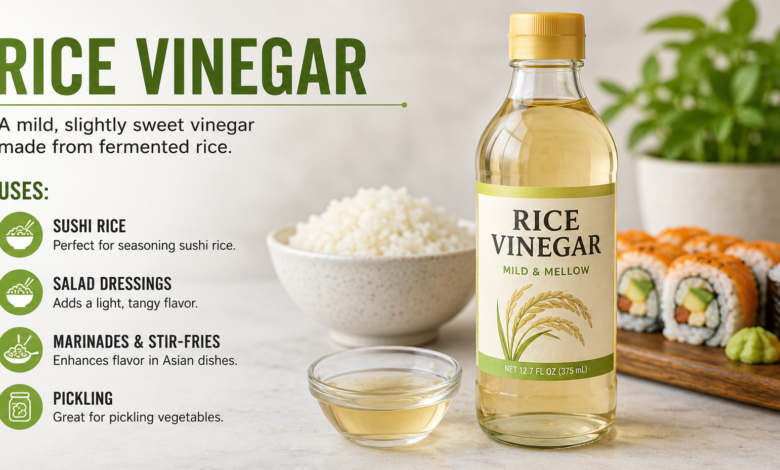
Rice vinegar is one of the most versatile ingredients found in Asian cuisine, yet many home cooks underestimate its value. Made through the fermentation of rice, this mild and slightly sweet vinegar adds balance, brightness, and complexity to a wide variety of dishes. From sushi rice and stir-fries to marinades and salad dressings, it delivers flavor without overpowering other ingredients.
As global cooking trends continue to embrace Asian flavors, rice vinegar has become a staple in kitchens around the world. Understanding how it differs from other vinegars, how to use it effectively, and which varieties work best for different recipes can help elevate everyday meals. This guide explores everything you need to know about vinegar, including its origins, nutritional profile, culinary applications, storage methods, and common misconceptions.
What Is Rice Vinegar?
Rice vinegar is a fermented vinegar produced from rice or rice wine. During fermentation, sugars in rice are converted into alcohol and then into acetic acid, creating a mild vinegar with a delicate flavor profile. Unlike stronger vinegars, it offers subtle acidity that complements rather than dominates food. It is commonly used in Japanese, Chinese, Korean, and Southeast Asian cooking because of its gentle character and versatility.
One reason many chefs prefer rice vinegar is its balance of sweetness and acidity. Compared with white vinegar and fermented rice wine, it delivers a smoother taste that works well in both savory and lightly sweet dishes. This unique balance makes it especially useful when preparing sushi rice and creating flavorful Asian dressings that require nuance rather than sharpness.
The History and Origins of Rice Vinegar
The origins of vinegar trace back thousands of years to East Asia, where fermentation techniques played a central role in food preservation and flavor development. Ancient communities discovered that fermented rice could be transformed into vinegar, creating a valuable ingredient that improved both taste and shelf life. Over time, different regions developed their own styles and production methods.
Japan, China, and Korea each contributed unique variations that remain popular today. Traditional methods often involved natural fermentation processes that could take months to complete. These techniques produced distinctive flavors that are still appreciated in modern Asian cuisine and traditional fermentation practices. Today, advanced production methods ensure consistent quality while preserving many characteristics that made vinegar a culinary staple throughout history.
Types of Rice Vinegar
Not all rice vinegar tastes the same. Different countries and production methods create unique varieties that vary in color, sweetness, acidity, and intended culinary use. Understanding these differences can help cooks choose the best option for specific recipes and flavor goals.
The most common styles include white vinegar, seasoned rice vinegar, black rice vinegar, and red vinegar. White varieties are popular for salad dressing recipes and pickled vegetables, while black vinegar offers a richer, more complex flavor often used in braised dishes and dipping sauces. Seasoned versions contain added sugar and salt, making them particularly convenient for preparing sushi rice.
| Type | Color | Flavor Profile | Common Uses |
|---|---|---|---|
| White Rice Vinegar | Clear to pale yellow | Mild and slightly sweet | Sushi, dressings, marinades |
| Seasoned Rice Vinegar | Light yellow | Sweet and balanced | Sushi rice, dipping sauces |
| Black Rice Vinegar | Dark brown to black | Rich, smoky, complex | Braises, dumplings, stir-fries |
| Red Rice Vinegar | Reddish hue | Tangy and mildly sweet | Soups, seafood dishes |
| Chinese Rice Vinegar | Varies | Deep and aromatic | Traditional Chinese cooking |
How Rice Vinegar Is Made
The production of vinegar begins with cooked rice, which undergoes fermentation through carefully controlled microbial activity. Natural enzymes break down starches into sugars, and those sugars are then transformed into alcohol. A second fermentation process converts the alcohol into acetic acid, resulting in vinegar.
Modern manufacturers use refined techniques to ensure consistency, but many premium products still rely on slower fermentation methods. These traditional approaches help develop complex flavors and aromas associated with artisanal vinegar and natural fermentation processes. The final product is filtered, bottled, and prepared for culinary use around the world.
Flavor Profile and Characteristics
Rice vinegar is known for its clean, mellow acidity and subtle sweetness. Unlike aggressive vinegars that can dominate a dish, it enhances existing flavors while adding freshness and depth. This makes it particularly valuable when working with delicate ingredients such as seafood, vegetables, and rice-based dishes.
Its flavor is often described as soft, balanced, and approachable. The gentle acidity works exceptionally well alongside umami flavors and savory seasonings, creating harmony within recipes. Whether used in marinades or finishing sauces, vinegar contributes brightness without introducing excessive sharpness.
Nutritional Value of Rice Vinegar
Rice vinegar contains very few calories and virtually no fat, making it an appealing ingredient for people seeking lighter cooking options. While it is not a major source of vitamins or minerals, its low-calorie nature allows cooks to enhance flavor without relying heavily on oils or sugary sauces.
Some studies suggest that vinegar consumption may support certain aspects of metabolic health when incorporated into a balanced diet. Although vinegar should not be viewed as a health remedy, it can be part of nutritious meals featuring whole food ingredients and healthy eating habits. Its ability to add flavor without excess calories contributes to its popularity among health-conscious consumers.
Health Benefits Associated With Rice Vinegar
Many people incorporate rice vinegar into their diets because of its potential wellness benefits. The acetic acid found in vinegar has been studied for possible effects on digestion, blood sugar regulation, and appetite management. While research continues, moderate consumption may complement an overall healthy lifestyle.
It is important to remember that vinegar is not a substitute for medical treatment or professional dietary advice. However, adding it to meals can encourage consumption of fresh vegetables and nutrient-rich foods, especially when used in homemade dressings and marinades. These dietary improvements often provide broader health advantages than vinegar alone.
Rice Vinegar vs Other Types of Vinegar
Choosing the right vinegar depends on flavor goals and recipe requirements. vinegar differs significantly from white vinegar, apple cider vinegar, balsamic vinegar, and malt vinegar. Its milder acidity and subtle sweetness make it uniquely suited for dishes where balance is essential.
For example, white vinegar delivers a sharp, intense tang, while apple cider vinegar provides fruity notes. Rice vinegar occupies a middle ground, offering gentle acidity that pairs beautifully with Asian-inspired recipes and homemade sauces. This versatility explains why many chefs keep multiple vinegar varieties available for different culinary situations.
Cooking Applications for Rice Vinegar
Rice vinegar shines in countless cooking applications. It can be used to brighten soups, enhance stir-fries, season rice, and balance rich sauces. Because its flavor is relatively mild, it works exceptionally well in dishes that require subtle acidity rather than aggressive sourness.
Home cooks often rely on rice vinegar when preparing vegetable stir-fries and flavorful marinades. A small amount can transform a dish by adding freshness and complexity. It is equally effective in cold preparations such as dressings and dipping sauces, making it one of the most versatile pantry ingredients available.
Rice Vinegar in Sushi Preparation
Perhaps the most famous use of rice vinegar is in sushi rice. Traditional sushi relies on a carefully balanced mixture of vinegar, sugar, and salt to season cooked rice. This seasoning creates the characteristic flavor that distinguishes sushi from plain rice.
Without vinegar, authentic sushi would lack its signature balance of sweetness and acidity. The ingredient enhances the texture and taste of Japanese cuisine and sushi seasoning, allowing seafood and vegetables to shine while maintaining overall harmony within each bite.
Using Rice Vinegar in Salad Dressings
Rice vinegar is an excellent foundation for salad dressings because its mild flavor blends seamlessly with oils, herbs, and seasonings. It creates dressings that are refreshing rather than overpowering, making it suitable for both leafy greens and grain-based salads.
A simple combination of vinegar, olive oil, garlic, and honey can produce a versatile dressing for everyday meals. Its compatibility with fresh greens and homemade vinaigrettes allows cooks to create balanced flavors without relying on heavily processed ingredients.
Rice Vinegar in Marinades and Sauces
Marinades often benefit from acidity because it helps tenderize ingredients while enhancing flavor penetration. vinegar performs this role effectively without overwhelming proteins or vegetables, making it a favorite ingredient in many Asian-inspired recipes.
It works especially well when combined with soy sauce, ginger, garlic, and sesame oil. Together, these ingredients create savory marinades and dipping sauces that deliver depth, balance, and complexity. Whether used for poultry, seafood, or vegetables, vinegar contributes a bright finishing note.
Pickling With Rice Vinegar
Pickling is another area where rice vinegar excels. Its gentle acidity preserves vegetables while maintaining a pleasant flavor profile that does not become excessively sour. Quick pickles made with vinegar can add texture and brightness to sandwiches, bowls, and side dishes.
Many cooks prefer vinegar for pickling cucumbers, carrots, radishes, and onions because of its balanced taste. The resulting vegetables often retain more nuanced flavors than those prepared with stronger vinegars. This makes it a valuable ingredient for quick pickling methods and homemade preserved vegetables.
Common Mistakes When Using Rice Vinegar
One common mistake is assuming all rice vinegar products are identical. Seasoned vinegar contains added sugar and salt, which can alter the final taste of recipes. Using it interchangeably with unseasoned varieties may produce unexpected results.
Another mistake involves excessive use. Although vinegar is mild, too much can still overwhelm a dish. Successful cooking depends on balance and careful seasoning. Paying attention to recipe proportions and flavor balance helps maximize the ingredient’s benefits while avoiding culinary missteps.
How to Store Rice Vinegar Properly
Proper storage helps preserve the flavor and quality of vinegar. Fortunately, vinegar has a naturally long shelf life because its acidity inhibits microbial growth. Keeping the bottle tightly sealed and stored in a cool, dark location is generally sufficient.
Exposure to excessive heat or sunlight may gradually affect flavor quality over time. While rice vinegar remains usable for extended periods, maintaining optimal storage conditions protects its delicate notes and ensures the best performance in pantry organization and long-term ingredient storage practices.
Choosing the Best Rice Vinegar
The ideal vinegar depends on your cooking goals. For general use, unseasoned white rice vinegar offers maximum flexibility because it allows complete control over sweetness and salt levels. Premium products often provide more nuanced flavors due to higher-quality fermentation methods.
Reading labels carefully is essential. Look for products with minimal additives and authentic production techniques whenever possible. High-quality options are often preferred by enthusiasts of gourmet cooking and authentic Asian ingredients, where subtle flavor differences can significantly impact finished dishes.
Trends and Growing Popularity of Rice Vinegar
Interest in vinegar continues to grow as consumers explore global cuisines and healthier cooking methods. The rise of home cooking, food content creators, and international culinary influences has introduced more people to its versatility and unique flavor characteristics.
Industry experts increasingly recognize the ingredient as a pantry essential rather than a specialty product. As demand for international flavors and home chef cooking experiences expands, vinegar is likely to remain an important component of modern kitchens worldwide.
“The best ingredients don’t overpower a dish—they help every other ingredient taste more like itself.”
Conclusion
Rice vinegar has earned its reputation as one of the most versatile and valuable ingredients in global cooking. Its gentle acidity, subtle sweetness, and adaptability make it suitable for everything from sushi rice and marinades to pickles and salad dressings. Unlike harsher vinegars, it enhances flavors while preserving balance, making it a favorite among both professional chefs and home cooks.
Whether you are exploring Asian cuisine for the first time or refining advanced culinary techniques, vinegar offers countless opportunities to improve flavor and creativity in the kitchen. By understanding its varieties, uses, benefits, and proper storage methods, you can confidently incorporate this remarkable ingredient into everyday cooking.
FAQ
What is rice vinegar used for?
Rice vinegar is commonly used in sushi rice, marinades, dressings, sauces, and pickling. Its mild flavor pairs well with Asian cooking and fresh ingredients.
Is rice vinegar healthier than white vinegar?
Rice vinegar and white vinegar have similar calorie counts, but vinegar offers a milder taste that encourages use in healthy recipes and balanced meals.
Can rice vinegar replace apple cider vinegar?
Rice vinegar can substitute for apple cider vinegar in many recipes, although it has a gentler flavor. It works particularly well in salad dressings and light marinades.
Does rice vinegar need refrigeration?
Rice vinegar does not usually require refrigeration after opening. Proper storage in a cool location supports ingredient freshness and long shelf life.
Is rice vinegar the same as rice wine?
No. Rice vinegar is produced through additional fermentation that converts alcohol into acetic acid. Rice wine remains an alcoholic beverage used in Asian cuisine and cooking applications.
Which type of rice vinegar is best for sushi?
Seasoned or unseasoned white vinegar is most commonly used for sushi. It provides the balance needed for sushi rice preparation and traditional Japanese recipes.
Can rice vinegar be used for pickling vegetables?
Yes. vinegar is excellent for pickling because its mild acidity creates flavorful pickled vegetables and quick pickle recipes without excessive sharpness.
You May Also Read: Roarbiznes Financial Infoguide by Riproar