
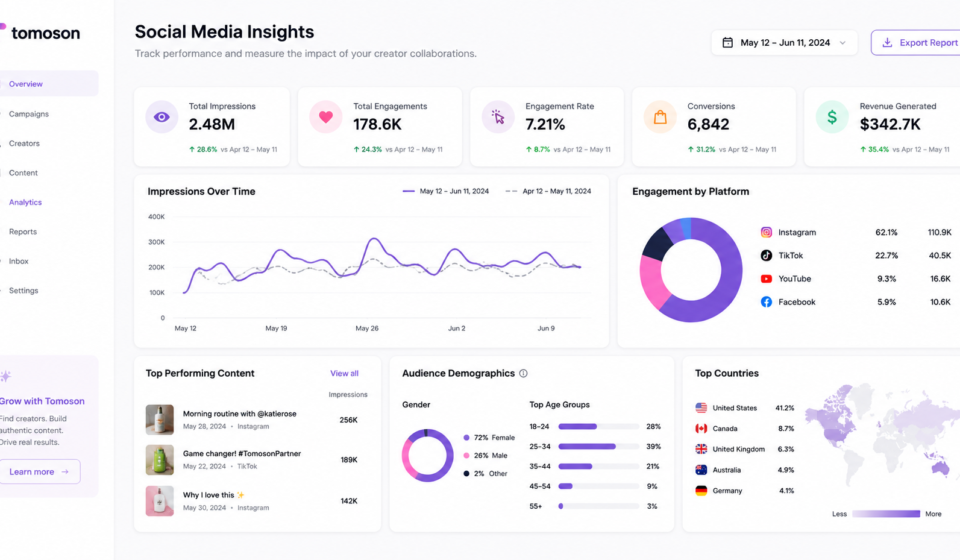
Tomoson Social Media Insights: The Complete Guide to Smarter Analytics and Better Engagement

Social media is no longer just a place to share updates or connect with friends. It has become one of the most powerful marketing channels for businesses, influencers, and content creators. However, success on social media isn’t about posting more content—it’s about understanding what works, why it works, and how to improve continuously. That’s where Tomoson Social Media Insights comes in.
By analyzing audience behavior, engagement patterns, and campaign performance, social media insights help marketers make informed decisions instead of relying on guesswork. Whether you’re managing a small business, running influencer campaigns, or growing a personal brand, the right insights can help you increase engagement, attract more followers, and improve your return on investment (ROI).
In this comprehensive guide, you’ll learn how Tomoson Social Media Insights works, which metrics matter most, how AI is changing social media analytics, and how to use actionable data to build a stronger marketing strategy in Social Media Insights 2026 and beyond.
What Are Tomoson Social Media Insights?
Tomoson Social Media Insights refers to the process of collecting, analyzing, and interpreting data from social media platforms to evaluate marketing performance. Instead of relying on assumptions, businesses can use measurable data to understand audience preferences, optimize content, and improve campaign effectiveness.
These insights include valuable information such as audience demographics, engagement rates, impressions, clicks, conversions, and content performance. By studying these metrics, marketers can identify successful strategies and eliminate approaches that don’t deliver results.
How Social Media Insights Work
Every interaction on social media creates valuable data. Likes, comments, shares, saves, video views, profile visits, and link clicks all contribute to a larger picture of audience behavior.
Analytics tools collect this information and organize it into reports that reveal patterns over time. For example, businesses may discover that educational videos receive significantly higher engagement than promotional posts or that their audience is most active during specific hours of the day.
Why Businesses Need Social Media Insights
Without analytics, social media marketing becomes little more than trial and error. Businesses need reliable insights to:
- Understand audience interests
- Improve content quality
- Increase engagement
- Measure campaign performance
- Allocate marketing budgets effectively
- Generate higher conversions
For example, an online clothing store may discover that Instagram Reels featuring styling tips generate twice the engagement of static product images. Using this insight, the business can adjust its content strategy to maximize reach and sales.
Why Social Media Analytics Matters More Than Ever
Digital competition continues to grow, making data-driven decision-making essential for brands of every size. Social media analytics allows marketers to identify trends before competitors, understand changing customer preferences, and adapt strategies quickly.
Understanding Audience Behavior
Knowing your audience goes beyond age and location. Modern analytics reveal interests, online habits, preferred content formats, purchasing behavior, and active browsing times.
These insights allow businesses to create personalized content that resonates with their target audience rather than producing generic posts.
Measuring Content Performance
Every piece of content performs differently. Analytics identify which posts attract the highest engagement, generate website traffic, or produce conversions.
Rather than guessing which content works best, marketers can make informed decisions based on measurable performance.
Improving Marketing ROI
Marketing budgets should produce measurable results. Analytics show which campaigns generate leads, sales, and customer engagement while highlighting underperforming efforts that require improvement.
This helps businesses invest resources more effectively.
Supporting Better Business Decisions
Data-driven marketing reduces uncertainty. Businesses can confidently launch campaigns, test new content formats, and evaluate long-term growth using measurable insights instead of assumptions.
Key Social Media Metrics You Should Track
Tracking the right metrics helps marketers understand both audience engagement and business performance. While vanity metrics like likes are useful, they should be evaluated alongside more meaningful indicators.
| Metric | What It Measures | Why It Matters |
| Reach | Unique users who viewed content | Measures brand awareness |
| Impressions | Total content views | Indicates visibility |
| Engagement Rate | Likes, comments, shares, saves | Reflects audience interaction |
| Click-Through Rate (CTR) | Percentage of link clicks | Measures interest in your offer |
| Conversion Rate | Visitors completing desired actions | Indicates campaign success |
| Audience Growth | New followers over time | Shows brand expansion |
| Video Views | Number of video plays | Measures content consumption |
| Shares & Saves | Content distributed by users | Indicates valuable content |
| Website Traffic | Visitors from social media | Connects social efforts to business goals |
| ROI | Revenue generated from campaigns | Evaluates profitability |
Engagement Rate
Engagement rate remains one of the most important indicators of content quality. High engagement typically suggests that your audience finds your content useful, entertaining, or relevant.
Reach and Impressions
Reach shows how many unique users saw your content, while impressions indicate how many times it appeared on users’ screens. Together, these metrics reveal the visibility of your campaigns.
Conversion Rate
Businesses should always measure how social media contributes to real business objectives such as purchases, sign-ups, or inquiries.
Audience Growth
Consistent follower growth often indicates that your content strategy is attracting new users while maintaining existing audience interest.
How Tomoson Social Media Insights Can Improve Your Marketing Strategy
Analytics should always lead to action. Collecting data is valuable only if it informs better marketing decisions.
Discover High-Performing Content
Insights reveal which topics, visuals, and formats generate the highest engagement. Businesses can then create more content around successful themes.
For example, if tutorial videos consistently outperform promotional posts, increasing educational content may significantly improve audience engagement.
Identify the Best Posting Times
Audience activity varies throughout the day. Analytics help identify when followers are most active, allowing businesses to publish content during peak engagement periods.
Posting at the right time can dramatically increase visibility without increasing advertising spend.
Understand Audience Interests
Demographic reports provide valuable information about age groups, geographic locations, interests, and online behavior.
This allows businesses to tailor content specifically to audience preferences.
Improve Campaign Performance
Marketing campaigns become easier to optimize when businesses continuously evaluate performance metrics.
If one campaign produces high click-through rates but low conversions, marketers can investigate landing pages or calls-to-action rather than abandoning the campaign entirely.
Recognize Emerging Trends
Analytics often identify growing audience interests before they become mainstream. Businesses that respond quickly can establish themselves as industry leaders.
Platform-by-Platform Social Media Insights
Each social media platform offers unique analytics that support different marketing objectives.
| Platform | Best Metrics | Primary Goal |
| Reach, Engagement, Shares | Community Growth | |
| Saves, Reels Views, Engagement | Brand Awareness | |
| Clicks, Impressions, Leads | B2B Marketing | |
| TikTok | Watch Time, Completion Rate | Viral Growth |
| X (Twitter) | Engagement, Mentions | Real-Time Conversations |
| Saves, Clicks | Product Discovery | |
| YouTube | Watch Time, Retention | Video Marketing |
Understanding platform-specific metrics allows marketers to optimize strategies rather than applying identical approaches across every channel.
AI-Powered Social Media Insights
Artificial intelligence is transforming how marketers analyze social media performance. Modern Social media insights tools no longer simply display historical data—they predict future trends, identify content opportunities, and automate reporting.
Predictive Analytics
AI can analyze historical performance to forecast which content topics are likely to perform well in upcoming weeks or months.
This allows marketers to plan campaigns proactively instead of reacting after trends have already peaked.
Automated Content Recommendations
Many modern analytics platforms now recommend posting schedules, hashtags, captions, and content formats based on previous audience behavior.
These recommendations reduce manual analysis while improving campaign effectiveness.
Trend Detection
One of the biggest advantages of AI is its ability to identify emerging conversations before they become widely popular. This capability is especially valuable for businesses that want to capitalize on Trending news on social media today and create timely, relevant content.
Smarter Audience Segmentation
AI groups audiences based on interests, purchasing behavior, engagement history, and interaction patterns. Instead of treating all followers the same, businesses can create highly personalized campaigns that improve both engagement and conversions.
AI-Generated Reports
Generating weekly or monthly Social media insights reports manually can be time-consuming. AI-powered platforms automate this process by highlighting key metrics, identifying significant changes, and providing actionable recommendations.
Social Listening vs. Social Media Analytics
Although these terms are often used interchangeably, they serve different purposes. Understanding both helps businesses build a more effective social media strategy.
What Is Social Listening?
Social listening involves monitoring conversations about your brand, competitors, industry, or products across social media and online communities. It helps identify customer opinions, emerging trends, and brand sentiment.
For example, if customers frequently complain about slow shipping on social media, social listening can uncover this issue before it impacts your reputation.
What Is Social Media Analytics?
Social media analytics focuses on measuring performance using metrics such as reach, impressions, engagement, clicks, and conversions. It answers questions like:
- Which posts perform best?
- How many users clicked our links?
- Which platform generates the highest engagement?
- What campaigns deliver the best ROI?
Social Listening vs. Analytics
| Social Listening | Social Media Analytics |
| Monitors conversations | Measures performance |
| Tracks brand mentions | Tracks KPIs |
| Analyzes customer sentiment | Measures engagement |
| Identifies trends | Evaluates campaigns |
| Supports reputation management | Supports marketing optimization |
The most successful businesses combine both approaches to gain a complete understanding of audience behavior and campaign effectiveness.
Best Social Media Insights Tools
Choosing the right Social media insights tool depends on your business goals, budget, and preferred platforms. Some tools specialize in reporting, while others offer AI-powered recommendations and competitor analysis.
| Tool | Best For | Key Features |
| Tomoson | Influencer campaigns | Performance tracking, campaign insights |
| Google Analytics | Website traffic | Social traffic, conversions, ROI |
| Hootsuite | Multi-platform management | Scheduling, reporting, analytics |
| Sprout Social | Enterprise teams | Advanced reporting, competitor analysis |
| Buffer Analyze | Small businesses | Easy-to-read dashboards |
| Metricool | Content creators | Cross-platform analytics |
| Native Platform Analytics | Beginners | Free built-in performance reports |
If you’re just getting started, using Social media insights free tools such as Meta Business Suite, LinkedIn Analytics, or YouTube Studio can provide valuable data without additional costs.
Some users also search for a Social media insights PDF to share reports with stakeholders. Most professional analytics platforms allow reports to be exported in PDF format, making presentations and performance reviews easier.
How to Build an Effective Social Media Insights Report
A well-organized Social media insights report transforms raw numbers into actionable business decisions.
Step 1: Define Your Goals
Before reviewing data, determine what success looks like. Your objectives might include:
- Increasing engagement
- Growing followers
- Driving website traffic
- Generating leads
- Increasing online sales
Step 2: Select Relevant KPIs
Avoid tracking every available metric. Focus on indicators that align with your business objectives, such as engagement rate, conversion rate, CTR, and audience growth.
Step 3: Compare Performance Over Time
Weekly and monthly comparisons reveal whether your strategy is improving. Identify trends instead of relying on isolated data points.
Step 4: Highlight Top-Performing Content
Document which posts generated the highest engagement, clicks, or conversions. Analyze why they succeeded and use those insights to guide future content.
Step 5: Create Action Items
Every report should conclude with practical recommendations, such as:
- Publish more educational videos.
- Increase posting during peak engagement hours.
- Test new content formats.
- Improve call-to-action placement.
- Expand successful campaigns.
Common Mistakes When Using Social Media Insights
Even experienced marketers sometimes misinterpret analytics. Avoid these common mistakes to make better decisions.
Focusing Only on Likes
Likes are helpful but rarely tell the complete story. Comments, shares, saves, click-through rates, and conversions often provide more meaningful insights.
Ignoring Business Goals
High engagement is valuable only if it supports your overall objectives. Always connect social media performance to measurable outcomes such as leads, sales, or customer retention.
Tracking Too Many Metrics
Monitoring every available KPI creates unnecessary complexity. Focus on a smaller set of meaningful metrics that directly influence your goals.
Skipping Regular Reviews
Analytics should be reviewed consistently. Waiting several months between evaluations makes it harder to identify trends and respond to changing audience behavior.
Copying Competitors Without Analysis
Competitor research is useful, but blindly copying another brand’s strategy rarely produces long-term success. Instead, use insights to understand your own audience’s preferences.
Real-World Example: Turning Data Into Growth
Imagine a small fitness coaching business struggling with low engagement on Instagram.
After reviewing Tomoson Social Media Insights, the team discovered that:
- Workout tutorial videos received three times more engagement than promotional graphics.
- Most followers were active between 7 PM and 9 PM.
- Carousel posts generated significantly more saves than single-image posts.
- Motivational content encouraged more comments and shares.
The business adjusted its strategy by posting educational Reels during peak hours, creating weekly carousel guides, and reducing promotional posts.
Within three months, the results included:
- 45% increase in engagement
- 32% growth in followers
- 28% increase in website traffic
- 21% improvement in online coaching inquiries
This example demonstrates how data-driven decisions consistently outperform guesswork.
Best Practices for Better Social Media Insights
To maximize the value of your analytics, follow these proven practices:
- Review analytics every week.
- Set measurable KPIs before launching campaigns.
- Use A/B testing to compare content formats.
- Monitor competitors regularly for benchmarking.
- Combine analytics with social listening for a complete audience view.
- Use AI-powered tools to automate reporting and identify trends.
- Keep testing, learning, and refining your strategy.
The Future of Social Media Insights 2026
As Social media insights 2026 continues to evolve, businesses will rely more heavily on artificial intelligence, automation, and predictive analytics.
Future trends include:
- AI-generated performance recommendations
- Real-time cross-platform dashboards
- Predictive engagement forecasting
- Advanced customer segmentation
- Privacy-focused analytics solutions
- Automated campaign optimization
- Deeper integration between social media and CRM platforms
Brands that embrace these innovations will be better equipped to understand their audiences and stay ahead of competitors.
Some users may also search for terms like Social media insights bloemlight, but regardless of the specific platform or feature being referenced, the underlying goal remains the same: using accurate data to create smarter, more effective marketing strategies.
Conclusion
Tomoson Social Media Insights empowers businesses, marketers, and creators to make informed decisions based on real performance data rather than assumptions. By tracking meaningful metrics, understanding audience behavior, and leveraging AI-powered analytics, you can continuously improve engagement, optimize campaigns, and increase your marketing ROI.
The most successful social media strategies aren’t built on viral luck—they’re built on consistent analysis, testing, and optimization. Whether you’re using free analytics tools or advanced reporting platforms, regularly reviewing your insights will help you create stronger content, connect with your audience, and achieve long-term business growth.
Frequently Asked Questions
What are Tomoson Social Media Insights?
Tomoson Social Media Insights refers to analyzing social media data such as engagement, reach, audience demographics, clicks, and conversions to improve marketing performance and make data-driven decisions.
What is the best social media insights tool?
The best tool depends on your needs. Tomoson, Google Analytics, Hootsuite, Sprout Social, and native platform analytics are all excellent choices for tracking performance and optimizing campaigns.
Are there free social media insights tools?
Yes. Facebook Insights, Instagram Insights, LinkedIn Analytics, YouTube Studio, TikTok Analytics, and X Analytics all offer free built-in reporting features for creators and businesses.
How often should I review social media insights?
Most experts recommend reviewing analytics weekly while preparing a detailed monthly report to evaluate long-term trends and campaign performance.
What should a social media insights report include?
A comprehensive report should include audience growth, engagement rate, reach, impressions, click-through rate, conversions, top-performing content, and actionable recommendations.
Can AI improve social media analytics?
Absolutely. AI helps predict trends, automate reporting, recommend content ideas, optimize posting schedules, and identify audience segments, making analytics faster and more effective.
You May Also Read: Fishing Family Thunder OntheGulf