Brass Instruments: The Complete Guide to Types, History, Sound, Playing Techniques, and Modern Uses

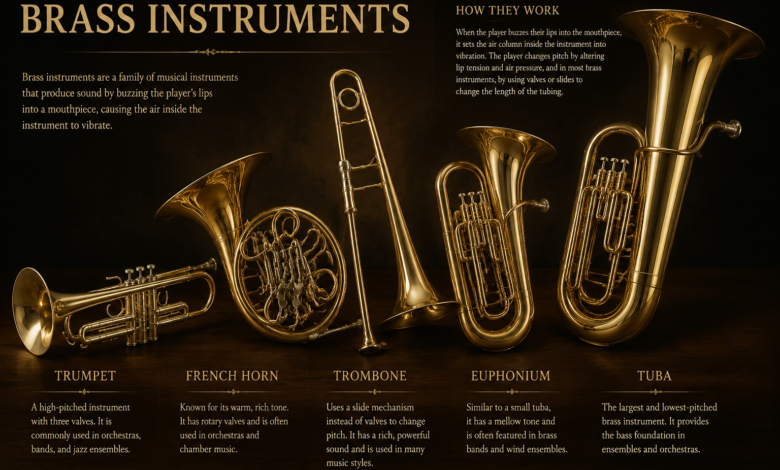
Few families of musical instruments have shaped global music as profoundly as brass instruments. From the triumphant fanfare of a trumpet to the deep resonance of a tuba, these instruments bring power, emotion, and character to countless musical styles. Whether featured in orchestras, marching bands, jazz ensembles, military ceremonies, or modern film scores, their influence is unmistakable.
Understanding how brass instruments work, where they originated, and how they are used today provides valuable insight into the broader world of music. This comprehensive guide explores their history, construction, playing techniques, maintenance requirements, and cultural significance while helping beginners and enthusiasts appreciate their remarkable versatility.
Understanding Brass Instruments
Brass instruments are musical devices that produce sound through the vibration of a player’s lips against a mouthpiece. Unlike many people assume, the material itself does not define the category. Instead, the method of sound production determines whether an instrument belongs to the brass family. Musical acoustics and lip vibration are the defining principles behind their operation.
The player buzzes their lips into a cup-shaped mouthpiece, creating sound waves that travel through the instrument’s tubing. By changing lip tension, air pressure, and valve positions, musicians alter pitch and tone. This combination of air column resonance and harmonic series allows performers to create a broad range of notes and expressive musical effects.
The History of Brass Instruments
The story of brass instruments stretches back thousands of years. Early civilizations used animal horns, shells, and primitive metal tubes for communication, religious ceremonies, and military purposes. Ancient cultures recognized the power of loud, projecting sounds long before modern instrument design emerged. Ancient horns and ceremonial trumpets played vital roles in these societies.
As metalworking techniques improved, instrument makers developed more sophisticated designs. The Renaissance and Baroque periods introduced significant innovations, while the Industrial Revolution accelerated advancements through valves and precision manufacturing. These developments transformed historical instruments and expanded musical evolution across Europe and beyond.
How Brass Instruments Produce Sound
The sound mechanism of brass instruments is both simple and fascinating. Players create a buzzing motion with their lips, generating vibrations that travel through the tubing. The instrument amplifies and shapes these vibrations into recognizable musical tones. Sound waves and resonance frequency work together to define the final output.
Different pitches are achieved by altering airflow, embouchure, and tubing length. Modern instruments often include valves or slides that change the path of air through additional tubing sections. This process enhances pitch control and improves tonal flexibility, enabling musicians to perform complex melodies and harmonies.
Main Characteristics of the Brass Family
One defining feature of brass instruments is their ability to project sound over long distances. Their bright, powerful tones make them ideal for both indoor and outdoor performances. The combination of strong projection and dynamic control contributes to their enduring popularity. Sound projection and dynamic range are especially valued in ensemble settings.
Another important characteristic is versatility. Brass players can produce gentle, lyrical passages or bold, dramatic statements depending on the musical context. Through careful use of embouchure technique and breath support, performers create an impressive variety of expressive sounds.
Types of Brass Instruments
The brass family includes instruments of various sizes, shapes, and tonal qualities. Each serves a distinct role within musical ensembles while sharing common acoustic principles. Understanding these differences helps musicians choose the instrument best suited to their goals. Instrument families and orchestral sections provide useful ways to categorize them.
Some instruments specialize in melodic lines, while others support harmonic foundations or rhythmic accents. Together, they form a balanced and complementary group. The diversity of tone colors and musical roles makes the brass family one of the most dynamic categories in music.
Brass Instruments Comparison Table
| Instrument | Pitch Range | Typical Role | Sound Character | Common Settings |
|---|---|---|---|---|
| Trumpet | High | Melody and fanfares | Bright and brilliant | Jazz, orchestra, bands |
| Cornet | High | Melodic support | Warm and mellow | Brass bands |
| French Horn | Mid-high | Harmony and melody | Rich and smooth | Orchestra |
| Trombone | Mid-low | Harmony and bass lines | Powerful and broad | Jazz, orchestra |
| Euphonium | Mid-low | Lyrical melodies | Warm and singing | Concert bands |
| Tuba | Low | Bass foundation | Deep and resonant | Bands and orchestras |
| Flugelhorn | High-mid | Expressive melodies | Soft and rounded | Jazz ensembles |
The Trumpet
Among all brass instruments, the trumpet is perhaps the most recognizable. Its brilliant tone and impressive agility allow it to perform everything from classical concertos to jazz improvisations. The instrument has become synonymous with leadership and musical prominence. Lead melodies and high register performance are often associated with trumpet playing.
Modern trumpets typically feature three valves that alter tubing length and expand the available note range. Skilled players combine valve techniques with precise embouchure control to achieve exceptional accuracy. Through articulation techniques and tone production, trumpeters create expressive and memorable performances.
The Trombone
The trombone stands out because it uses a slide instead of valves. This design enables smooth pitch transitions and unique expressive effects that are difficult to achieve on other brass instruments. Slide positions and glissando effects define much of its musical identity.
Its tone ranges from warm and lyrical to bold and commanding, making it valuable across genres. Whether supporting harmonies or delivering solos, the trombone contributes depth and character. The combination of pitch accuracy and musical phrasing allows experienced players to achieve remarkable expressiveness.
The French Horn
The French horn occupies a special place within orchestras due to its rich and noble sound. Its long tubing is coiled into a compact shape, creating a distinctive appearance and tonal character. Orchestral harmony and lyrical passages often showcase the instrument’s strengths.
Playing the French horn requires precision because of its closely spaced harmonics. Even small changes in embouchure can affect pitch. Mastering horn technique and breath management is essential for achieving consistency and musical confidence.
The Tuba
The tuba serves as the foundation of the brass section, producing the lowest pitches in the family. Its large size and extensive tubing create a powerful yet surprisingly flexible voice. Bass support and low-frequency resonance make it indispensable in ensembles.
Despite its reputation as a supporting instrument, the tuba is capable of lyrical solos and technical passages. Modern performers continue expanding its repertoire through innovative compositions. Enhanced air efficiency and sound depth allow tubists to contribute much more than simple accompaniment.
The Euphonium
The euphonium is known for its warm, vocal-like sound and exceptional lyrical capabilities. Frequently featured in concert bands, it bridges the gap between higher brass voices and lower bass instruments. Melodic phrasing and expressive tone are central to its appeal.
Many musicians consider the euphonium one of the most beautiful-sounding brass instruments due to its smooth timbre. Its versatility supports both solo and ensemble performance. Through careful tone shaping and legato playing, performers create remarkably emotional musical experiences.
The Cornet and Flugelhorn
The cornet resembles the trumpet but produces a warmer and softer sound because of its more conical tubing design. It remains a cornerstone of traditional brass bands and educational ensembles. Conical bore construction and warm timbre distinguish it from brighter brass instruments.
The flugelhorn offers an even mellower tone, making it popular in jazz and commercial music. Its rich sound blends beautifully with other instruments while maintaining strong individuality. Musicians often value its smooth projection and lyrical character in expressive settings.
Brass Instruments in the Orchestra
Within the symphony orchestra, brass instruments contribute power, color, and dramatic intensity. Composers use them to highlight climactic moments, reinforce harmonies, and create memorable themes. Symphonic repertoire and orchestral balance depend heavily on effective brass writing.
The brass section typically includes trumpets, trombones, French horns, and tubas working together as a cohesive unit. Their combined sound adds grandeur and emotional weight to performances. Effective use of ensemble coordination and dynamic contrast enhances the overall musical experience.
Brass Instruments in Jazz Music
Jazz transformed the role of brass instruments by emphasizing improvisation and personal expression. Trumpets and trombones became central voices in many influential ensembles, shaping the development of the genre. Jazz improvisation and swing rhythms remain closely linked to brass performance.
Legendary performers demonstrated how brass instruments could communicate emotion, creativity, and individuality. Their innovations continue influencing musicians worldwide. Through solo interpretation and musical storytelling, brass players contribute unique voices to jazz traditions.
“The instrument is only a tool; the music comes from the musician.”
Brass Instruments in Marching Bands
Marching bands rely heavily on brass instruments because of their volume, projection, and durability. Their ability to carry sound across large outdoor spaces makes them ideal for parades, sporting events, and ceremonial performances. Field performance and outdoor acoustics are important considerations in these environments.
Specialized marching versions of brass instruments are often designed for mobility and comfort. Players must balance musical precision with physical movement. Effective marching technique and performance endurance are essential for success in these demanding settings.
Learning to Play Brass Instruments
Beginning a brass instrument journey can be both exciting and challenging. New players must develop embouchure strength, breath control, and listening skills while learning proper posture and technique. Beginner musicians and practice routines play crucial roles in early development.
Consistent practice helps students build confidence and overcome initial difficulties. Small daily improvements often lead to significant long-term progress. Developing muscle memory and technical fundamentals creates a strong foundation for future growth.
Essential Playing Techniques
Successful brass performance depends on mastering several key techniques. Players must learn how to control airflow, shape notes, articulate phrases, and maintain consistent tone quality. Tonguing methods and air support are among the most important skills.
Advanced musicians also explore vibrato, extended techniques, and stylistic interpretation. These abilities add depth and personality to performances. The integration of musical expression and technical mastery distinguishes experienced performers from beginners.
Choosing the Right Brass Instrument
Selecting an instrument depends on factors such as age, physical characteristics, musical interests, and long-term goals. Some beginners are drawn to the trumpet’s brilliance, while others prefer the tuba’s depth or the euphonium’s warmth. Instrument selection and personal preference should guide the decision.
Teachers often recommend trying multiple options before committing to one. Comfort and enthusiasm frequently influence success more than perceived difficulty. Evaluating playing ergonomics and musical aspirations helps students make informed choices.
Brass Instrument Maintenance
Proper maintenance ensures reliable performance and extends the life of an instrument. Regular cleaning prevents buildup that can affect sound quality and mechanical function. Instrument care and preventive maintenance are essential responsibilities for every player.
Valves, slides, and tuning mechanisms require periodic attention to operate smoothly. Neglecting maintenance can lead to costly repairs and diminished performance. Consistent cleaning routines and lubrication practices help preserve both appearance and functionality.
Common Challenges for Players
Every brass musician encounters obstacles during their development. High notes, endurance, intonation, and breath control are common areas of difficulty. Performance challenges and technical development require patience and focused practice.
Overcoming these issues often involves guidance from teachers, structured exercises, and consistent effort. Progress may occur gradually, but persistence yields results. Building practice discipline and problem-solving skills contributes significantly to long-term success.
Health Benefits of Playing Brass Instruments
Playing brass instruments offers more than musical enjoyment. The physical demands of controlled breathing can strengthen respiratory function and improve posture. Lung capacity and breathing efficiency often benefit from regular practice.
Music-making also supports mental well-being by encouraging concentration, creativity, and emotional expression. Many musicians find that performance provides a meaningful outlet for communication. Enhanced cognitive engagement and stress reduction are additional advantages.
Modern Technology and Brass Instruments
Technology continues shaping the world of brass performance through improved manufacturing techniques, educational tools, and digital resources. Instrument makers use advanced materials and precision engineering to enhance reliability. Modern craftsmanship and instrument innovation drive ongoing development.
Online lessons, practice apps, and recording technology provide new opportunities for learning and collaboration. Musicians can access resources that previous generations never imagined. The growth of digital education and virtual instruction has expanded access to quality training.
Brass Instruments in Contemporary Music
While deeply rooted in tradition, brass instruments remain highly relevant in modern music. They appear in pop recordings, film scores, video game soundtracks, and experimental compositions. Contemporary arrangements and cross-genre collaboration continue expanding their reach.
Artists frequently combine brass sounds with electronic elements to create fresh musical textures. This adaptability demonstrates the enduring appeal of the brass family. Through creative production and modern performance practices, these instruments continue evolving.
Cultural Importance Around the World
Brass instruments play significant roles in cultural traditions across continents. Different societies incorporate them into celebrations, religious ceremonies, public events, and artistic performances. Cultural heritage and musical traditions often feature brass ensembles prominently.
Their presence reflects the universal appeal of powerful, expressive sound. Despite regional differences, the brass family consistently serves as a vehicle for community expression. The blending of local customs and musical identity highlights their global significance.
The Future of Brass Instruments
The future of brass instruments appears bright as educators, performers, and manufacturers continue pushing boundaries. New compositions, teaching methods, and technological innovations are attracting fresh generations of musicians. Future musicians and educational innovation will shape the next chapter of development.
As musical styles evolve, brass instruments are likely to remain central to both traditional and contemporary settings. Their adaptability ensures continued relevance across diverse artistic landscapes. Ongoing creative exploration and performance evolution will keep the brass family thriving.
Conclusion
Brass instruments represent one of the most influential and versatile families in music. From ancient ceremonial horns to modern orchestras, jazz ensembles, marching bands, and recording studios, they have maintained a powerful presence across cultures and centuries.
Whether you are a beginner exploring your first instrument, a student developing technical skills, or an enthusiast seeking deeper knowledge, understanding brass instruments opens the door to a fascinating world of sound, history, and artistic expression. Their unique combination of power, beauty, and adaptability ensures they will continue inspiring musicians and audiences for generations to come.
FAQ
What are brass instruments?
Brass instruments are musical instruments that produce sound through lip vibration into a mouthpiece. Common examples include trumpets, trombones, French horns, euphoniums, and tubas.
Why are brass instruments called brass instruments?
The term refers to the family classification rather than the material alone. Brass instruments are defined by how sound is produced, even if some are made from other materials.
Which brass instrument is easiest for beginners?
Many educators recommend the trumpet, cornet, or euphonium for beginners because they offer accessible learning paths and extensive educational resources.
How often should brass instruments be cleaned?
Most brass instruments benefit from regular maintenance, including weekly inspections and thorough cleaning every few months depending on usage.
Are brass instruments used in modern music?
Yes, brass instruments are widely used in pop, jazz, film music, video game soundtracks, contemporary classical works, and many other genres.
What is the largest brass instrument?
The tuba is generally considered the largest standard member of the brass family and produces the lowest pitches in most ensembles.
Can adults learn brass instruments?
Absolutely. Brass instruments can be learned at any age with consistent practice, proper instruction, and realistic expectations regarding progress.
You May Also Read: TheBoringMagazine IT